
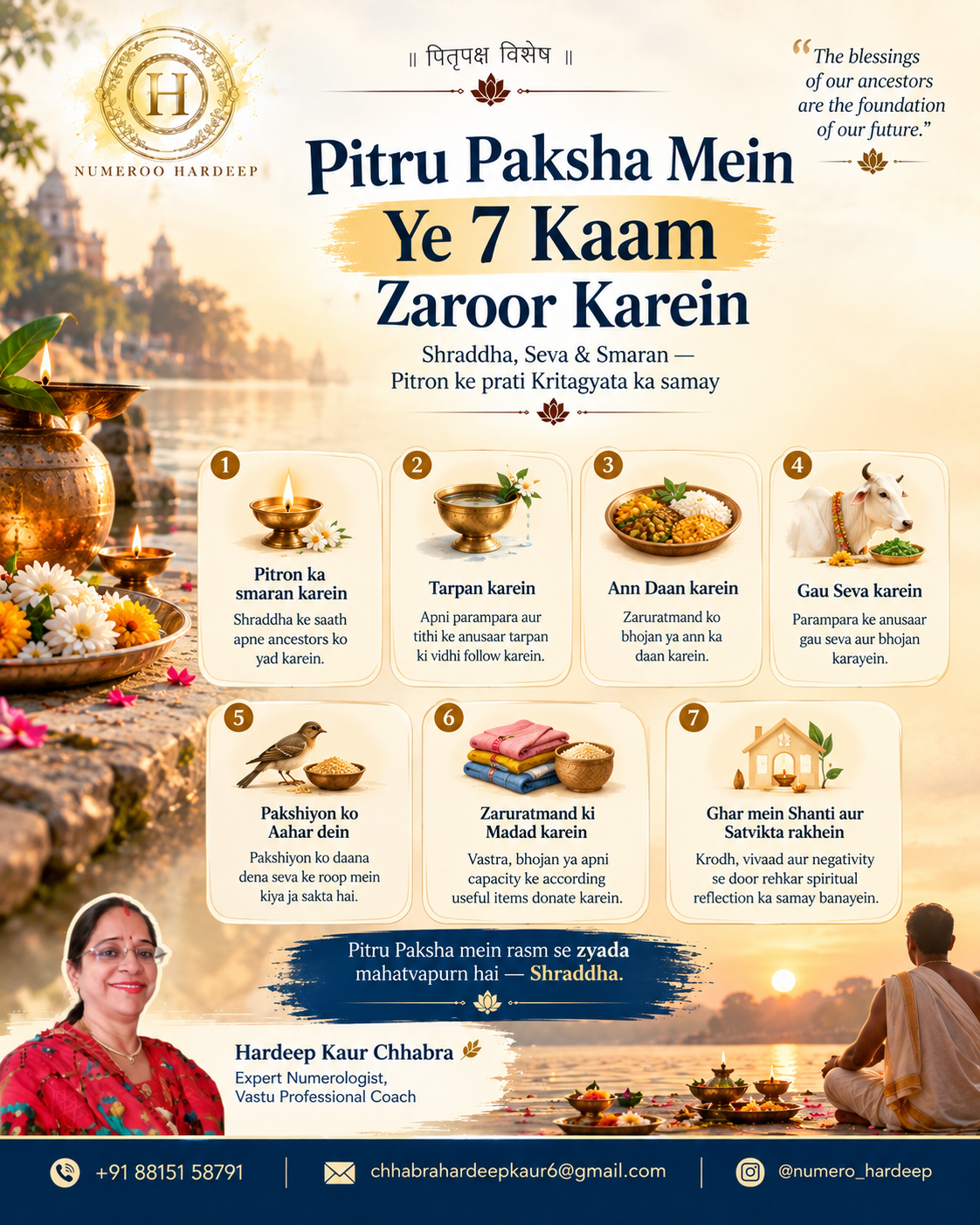
Pitru Paksha is a traditional period dedicated to remembering and honouring ancestors. During these days, many Hindu families perform Shradh, Tarpan, food offerings and charity as expressions of gratitude towards their departed family members. In 2026, the main Pitru Paksha period is observed from 27 September to 10 October.If you are wondering “Pitru Paksha Mein Ye 7 Kaam Zaroor Karein”, this guide will help you understand some meaningful practices followed during this period.
But Pitru Paksha is not only about performing a ritual on one particular day. It is also a time to practise gratitude, simplicity, charity and remembrance.
So, Pitru Paksha mein kya karein? Here are 7 meaningful practices that many families follow during this period.
Pitru Paksha Mein Ye 7 Kaam Zaroor Karein: Important Practices-
1. Pitron Ka Smaran Karein
The first and most important practice is remembering your ancestors with respect and gratitude.
You can remember their names, talk about their good qualities with younger family members, look at old family photographs or simply spend a few peaceful moments expressing gratitude for what you received from them.
Pitru Paksha is traditionally associated with remembrance rather than celebration. Therefore, maintaining a calm and respectful environment can make these days more meaningful.
2. Tarpan Karein
Tarpan is an important part of many Shradh traditions. It generally involves offering water, often with black sesame seeds, while remembering the ancestors.
The exact procedure, mantras and materials can differ according to family tradition and region. If you are unsure about the correct method, it is better to follow the practice traditionally followed in your family or consult a knowledgeable priest.
The purpose is not simply to perform the ritual mechanically but to do it with shraddha and remembrance.
3. Ann Daan Aur Bhojan Seva Karein
Ann Daan has an important place in many Pitru Paksha traditions.
Families may prepare a simple meal and offer food as part of their Shradh tradition. Food may also be donated to people who need it.
Many traditional practices emphasise simple, freshly prepared and sattvic food during Shradh. Common preparations can include dal, rice, seasonal vegetables and kheer, although specific food rules vary between families and regions.
A simple principle to follow is:
“Jitna zaroori ho utna banayein, aur bhojan ko waste na karein.”
4. Gau Seva Karein
In several Hindu traditions, Gau Seva is associated with Shradh and ancestral observances.
Some families offer suitable food to a cow as part of their traditional practice. If your family follows this custom, it can be included respectfully during Pitru Paksha.
The important point is to follow the practice safely and appropriately rather than treating it as a compulsory ritual for everyone.
5. Pakshiyon Ko Aahar Dein
Offering food or grain to birds is another simple way many families incorporate seva into their Pitru Paksha observance.
Instead of wasting food, you can consciously share suitable food with birds or animals where appropriate.
Some ancestral traditions also include feeding crows, cows or other animals. These practices vary by family and region, so following your established family tradition is preferable.
6. Zaruratmand Ki Madad Karein
Pitru Paksha can also become an opportunity for charity and meaningful service.
You may donate:
- Food grains
- Cooked meals
- Clothes
- Essential household items
- Educational supplies
- Other useful necessities
The idea is to make the remembrance of ancestors meaningful through an act of kindness.
Rather than focusing on how much you donate, focus on genuine intention and usefulness.
7. Ghar Mein Shanti Aur Satvikta Banaye Rakhein
During Pitru Paksha, many families choose a simpler and more disciplined lifestyle. They may avoid unnecessary arguments, excessive indulgence and celebratory activities.
Food habits may also become simpler. Many families avoid non-vegetarian food and alcohol, while some also avoid onion and garlic. However, these restrictions are not identical across every family or region.
Try to make your home environment peaceful by:
- Avoiding unnecessary conflicts
- Speaking respectfully with family members
- Keeping the ritual space clean
- Following your family’s traditions
- Avoiding food wastage
- Spending some quiet time in remembrance
Pitru Paksha Mein Sabse Important Kya Hai?
The essence of Pitru Paksha is shraddha — sincere respect and remembrance.
Different families may follow different procedures. Some perform detailed Shradh rituals with a priest, while others observe a simpler form of remembrance and charity at home. Even the ingredients and methods used for Pind Daan and Tarpan can vary according to regional and family traditions.
Therefore, there is no need to follow random rituals simply because they are trending online.
Apni family tradition, local Panchang aur knowledgeable guidance ko priority dein.
Pitru Paksha Mein Kya Yaad Rakhein?
A simple checklist can help:
🪔 Smaran – Ancestors ko gratitude ke saath yaad karein.
💧 Tarpan – Parampara ke according Tarpan karein.
🍚 Ann Daan – Food ko respect karein aur zaruratmand ki madad karein.
🐄 Seva – Gau ya other traditional forms of seva follow karein.
🐦 Aahar – Birds/animals ko suitable food dene ki parampara ho to follow karein.
🤲 Daan – Useful items ya food donate karein.
🕉️ Shanti – Ghar mein peaceful aur respectful environment rakhein.
Frequently Asked Questions About Pitru Paksha
1. Pitru Paksha 2026 kab hai?
The main Pitru Paksha 2026 period begins with Pratipada Shraddha on 27 September 2026 and concludes with Sarva Pitru Amavasya on 10 October 2026.
2. Pitru Paksha mein kya karna chahiye?
Families traditionally observe practices such as Shradh, Tarpan, ancestor remembrance, food offerings, charity and seva. The exact procedure depends on family and regional traditions.
3. Kya Pitru Paksha mein Tarpan ghar par kar sakte hain?
Many families do perform Tarpan at home. However, the method and materials can vary, so those unfamiliar with the ritual should follow their family tradition or seek guidance from a knowledgeable priest.
4. Pitru Paksha mein kya khana chahiye?
Many families prefer simple, freshly prepared vegetarian and sattvic food during Shradh. Dal, rice, seasonal vegetables and kheer are among foods commonly used in traditional households. Specific restrictions differ by family and region.
5. Kya Pitru Paksha mein daan karna chahiye?
Charity and food donation are commonly associated with Pitru Paksha observances. Families may donate food, grains, clothes or other useful necessities in memory of their ancestors.
6. Kya Pitru Paksha mein Gaya jaana zaroori hai?
Gaya has particular traditional significance for Pind Daan, but not every family is able to travel there. Home-based Shradh and Tarpan are also practised by many families according to their traditions.
7. Pitru Paksha mein sabse important kya hai?
The central idea is shraddha, remembrance and respect for ancestors. Ritual details may differ, but approaching the observance with sincerity and following your family tradition is important.
Conclusion
Pitru Paksha is a time to remember where we come from and express gratitude for those who came before us.
From Tarpan and Shradh to Ann Daan, Gau Seva, charity and simply maintaining peace at home, there are many ways to make these days meaningful.
At Numero Hardeep, the focus is on understanding spiritual and traditional practices with awareness rather than fear. Follow your family customs, check the appropriate Panchang for your location and perform rituals with sincerity.
Because Pitru Paksha mein rasm se zyada mahatvapurn hai — Shraddha. 🪔